How Much Does a Semi-Truck Cost in 2026? New vs Used Pricing Guide
Semi-Truck Cost: Key Facts
How much does a semi-truck cost in 2026? It depends on whether it is new or used, configuration, and mileage. The quick numbers:
- New Class 8 tractors: about $140,000 to $220,000+, by configuration.
- Used Class 8 trucks: about $60,000 to $120,000+ for late-model and $25,000 to $60,000+ for older, higher-mileage units.
- 2026 Kenworth T680: about $175,000 to $195,000+ new, by equipment.
- Monthly payment: no single number; it moves with price, down payment, term, rate, and credit.
- Where CSM fits: CSM carries new and used trucks plus in-house financing through CSM Financial, so price and payment come together.
Pricing shown throughout this article is illustrative only and should not be relied on as a quote or offer. All figures are broad industry estimates, and real pricing varies by specification, build date, market conditions, location, and available incentives. Contact CSM for current pricing on a specific truck.
How Much Does a Semi-Truck Cost in 2026?
A semi-truck in 2026 generally costs from about $25,000 for an older, high-mileage used tractor to $220,000 or more for a new, well-equipped sleeper. Configuration, age and mileage move the price more than any single average does, so no one figure fits every truck.
The table shows the 2026 price range for each common truck type and who it suits:
| Truck Type | Approx. 2026 Price Range | Best For |
|---|---|---|
| New Class 8 day cab | $140,000 to $180,000+ | Local and regional fleets |
| New Class 8 sleeper | $160,000 to $220,000+ | Long-haul operations |
| Late-model used Class 8 | $60,000 to $120,000+ | Buyers balancing price and remaining life |
| Older used Class 8 | $25,000 to $60,000+ | Budget-focused buyers who can accept higher maintenance risk |
These are general market ranges, not CSM pricing. Specialized or heavily optioned trucks sit above them. The sections below break the numbers down by new, used, and model.
New vs Used Semi-Truck Prices in 2026
New and used trucks are priced on different logic, and the sticker is only the start. New costs more upfront but adds warranty coverage and minimal mileage. Used costs less but carries more risk on condition and remaining life. Weigh price against warranty, repairs, downtime, and useful life, not the sticker alone.
Here is how they compare on the factors buyers weigh most. Pair it with CSM’s new-truck inventory and used-truck inventory:
| Factor | New Semi-Truck | Used Semi-Truck |
|---|---|---|
| Purchase price | Higher | Lower |
| Mileage | Minimal | Varies |
| Warranty | Stronger, new-vehicle coverage | Depends on age and program |
| Maintenance risk | Generally lower early on | Typically higher |
| Financing | Often more favorable terms | Rates and terms may vary |
| Depreciation | Highest in the early years | Less initial depreciation |
| Specifications | Can often be ordered and configured | Limited to available inventory |
| Availability | Depends on production and inventory | Often quicker to acquire |
How Much Does a New Semi-Truck Cost?
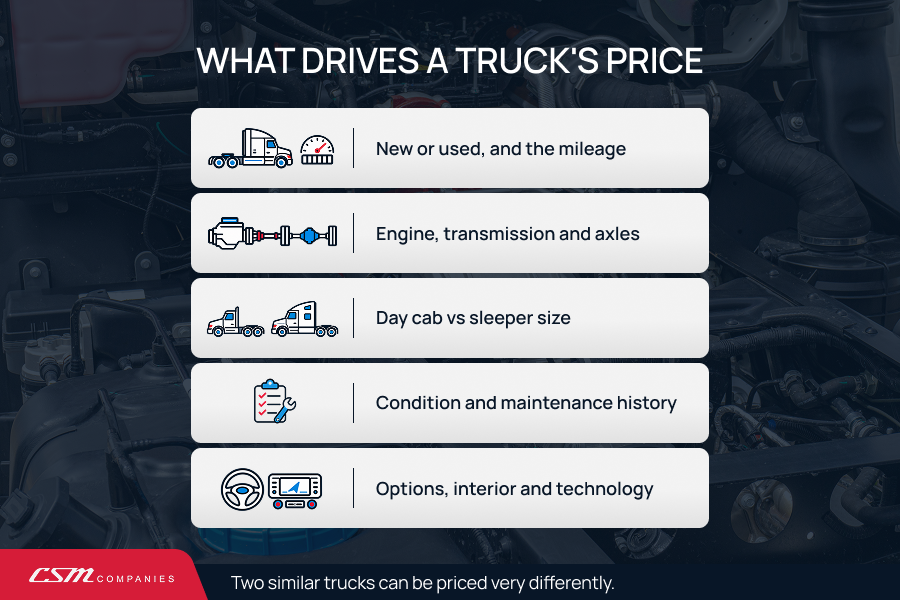
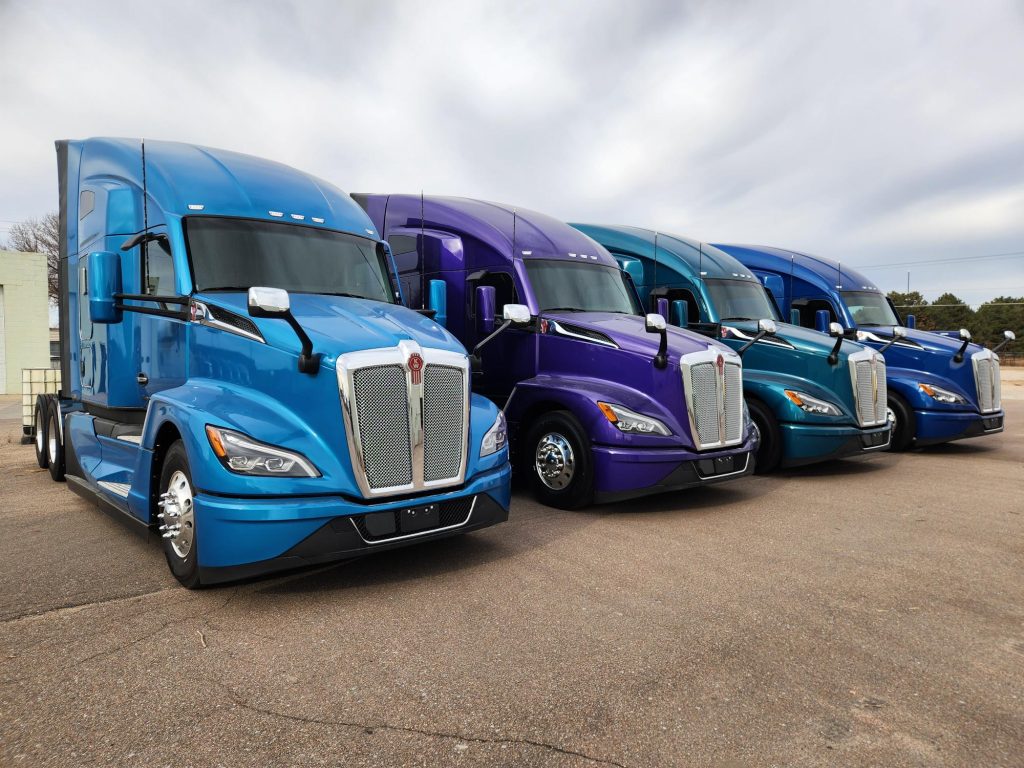
A new Class 8 tractor in 2026 generally runs about $140,000 to $220,000+. A day cab for local and regional work can be around $140,000 to $180,000+, and a long-haul sleeper can be around $160,000 to $220,000+. Because a new truck is built to order, two of the same models can be tens of thousands of dollars apart.
Engine and horsepower, transmission, axle ratio, sleeper size, interior, driver-assistance tech, aerodynamics, and dealer-installed options all move the price. That is where CSM can help. As a Kenworth dealer group, CSM carries new Class 8-day cabs and sleepers across common configurations, so you can see how each spec changes the price on real trucks instead of a national average. The team can walk you through the trade-offs for your routes and payload before you buy.
How Much Does a Used Semi-Truck Cost?
Used pricing varies even more than new, because condition and history sit on top of age and mileage. ACT Research put the average retail used Class 8 price at $61,751 in June 2026, though individual trucks land well above or below that. In broad 2026 terms, used trucks fall into two price bands:
- Late-model, lower-mileage Class 8: commonly $60,000 to $120,000+
- Older or higher-mileage Class 8: commonly $25,000 to $60,000+
Conditions can outweigh model year, so inspect closely: mileage and engine hours, idle hours, the engine and aftertreatment system, transmission, tires, brakes and suspension, maintenance records, accident history, and remaining warranty.
Does Mileage Matter More Than Model Year?
Not always. Two trucks from the same model year can differ sharply in value depending on how they were run and maintained. A well-serviced truck with high highway miles can beat a low-mileage one that idled hard. Certified pre-owned trucks cut that risk through added inspection and reconditioning.
How Much Does a 2026 Kenworth T680 Cost?
A new 2026 Kenworth T680 generally costs about $175,000 to $195,000+, with some configurations in the upper $180,000s and a basic day cab below that. It is highly configurable, so no single MSRP fits every truck.
CSM is a Kenworth dealer group, so the price on an actual truck in CSM’s Kenworth inventory beats a nationwide estimate. CSM stocks Kenworth T680 trucks in a range of configurations and can order the exact spec you need when it is not already on the lot. Because financing runs in-house through CSM Financial, you can line up the truck and the payment in one place.
What Affects Kenworth T680 Pricing?
The main price movers are the PACCAR MX-13 rating, day cab or sleeper size, transmission, axle spec, interior trim, and the driver-assistance and aerodynamic packages. To price the exact truck you want, see what is on the lot now.

How Much Is a Semi-Truck Monthly Payment?
There is no universal semi-truck monthly payment. It is built from the price, down payment, amount financed, APR, term, credit and business history, truck age, and taxes and fees. As a rough 2026 guide, payments run about $900 to $1,700 for a used truck five to eight years old, $1,500 to $2,400 for one to two to four years old, and $2,200 to $3,500+ for a new truck.
The examples below are illustrative, not quotes:
| Example | Truck Price | Down Payment | Amount Financed | Term | Estimated Payment |
|---|---|---|---|---|---|
| Used truck | $60,000 | $10,000 | $50,000 | 60 months | about $1,050* |
| Late-model used | $100,000 | $15,000 | $85,000 | 60 months | about $1,785* |
| New truck | $180,000 | $30,000 | $150,000 | 72 months | about $2,665* |
*Illustrative only, at an assumed 9.5% APR on the used examples and 8.5% on the new one. Not CSM offers; actual rates depend on credit and the lender.
How Much Does Semi-Truck Insurance Cost?
Semi-truck insurance is one of the higher recurring costs, so build it into the budget early. Premiums vary by how the truck is operated. Current 2026 market estimates commonly run:
- Leased-on owner-operators: roughly $250 to $600 per month
- Established owner-operators with their own authority: roughly $900 to $1,600+ per month
- New authorities: roughly $1,200 to $2,500+ per month
These are estimates, not quotes. Many owner-operator and small-fleet packages cluster around $800 to $2,000 per month per truck, higher for new authorities.
Your premium depends on driving history and CDL experience, authority age, operating radius and location, cargo type, truck value, claims history, coverage limits, and deductibles. CSM Financial also offers physical damage and GAP coverage alongside financing. Bundling that coverage with your financing through CSM Financial keeps the truck, the payment, and the protection under one roof, reducing paperwork and renewals. The team can also factor insurance into your monthly budget up front, so the number you plan around reflects the real cost of putting the truck to work.
What Is the Total Cost of Owning a Semi-Truck?
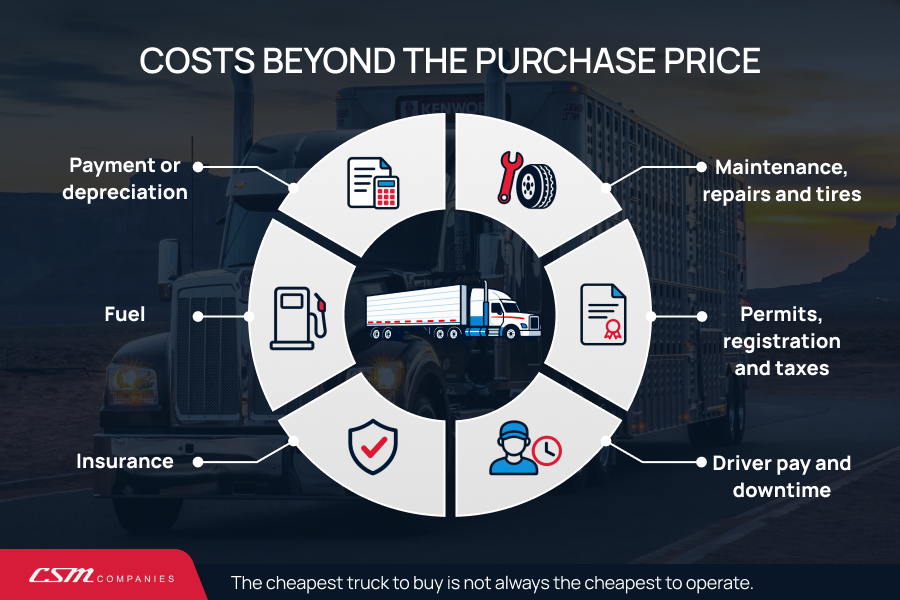
The real cost of a semi-truck is far more than the sale price. Total cost of ownership covers everything it takes to keep the truck earning:
- Payment or depreciation: the monthly payment on a financed truck or the value an owned truck loses over time.
- Fuel: often the single largest operating expense. Track current on-highway diesel prices through the U.S. Energy Information Administration.
- Insurance: liability, cargo, and physical damage, which vary widely by operation.
- Maintenance and repairs: routine preventive service plus the repairs every truck eventually needs. A planned maintenance program makes more of that cost predictable.
- Tires: a predictable, recurring replacement and repair cost.
- Permits, registration, and taxes: federal registration and operating authority run through the FMCSA, and depreciation can carry tax implications worth reviewing with an accountant.
- Driver cost: for a fleet-owned truck, labor is a major part of operating cost.
- Downtime: a cheap truck that needs frequent repairs can cost more in lost revenue than it saved at purchase.
Side by side, the new-vs-used trade-off is clearer:
| Cost | New Truck | Used Truck |
|---|---|---|
| Purchase or payment | Higher | Lower |
| Initial maintenance | Usually lower | Potentially higher |
| Warranty protection | Greater | Varies |
| Depreciation | Higher early on | Usually lower |
| Unexpected repair risk | Generally lower early on | Generally higher |
| Downtime risk | Typically lower early on | Depends heavily on condition |
The takeaway is simple: the cheapest truck to buy isn’t always the cheapest to operate.
Is It Better to Buy a New or Used Semi-Truck?
Whether new or used is better depends on how you run. A new truck tends to fit when:
- Uptime is critical
- You want strong warranty coverage
- You keep trucks for years and need exact specs
- Financing supports the higher price
A used truck tends to fit when:
- Lower upfront cost is the priority
- You need equipment quickly
- The truck has strong service records
- Lower initial depreciation matters
Between the two options sits certified pre-owned: the lower price of used equipment plus added inspection, reconditioning, or warranty benefits. It is a practical middle ground for limiting risk without paying new-truck prices.
How to Finance a Semi-Truck
Financing a semi-truck follows a clear path:
- Set your budget and down payment.
- Choose new, used, or certified pre-owned.
- Review available trucks.
- Apply for financing.
- Compare term, APR, and total cost.
- Factor in insurance and operating cash.
How Much Do You Need Down on a Semi-Truck?
Many lenders look for about 10% to 20% down, though the figure moves with credit, business history and the truck. A stronger profile can lower it; a newer business may see more.
What Credit Score Do You Need to Finance a Semi-Truck?
There is no single cutoff. Stronger credit earns better rates and terms, but lenders also weigh business history, down payment and the equipment. Approval is never guaranteed up front, so compare offers before committing.
CSM keeps this under one roof through CSM Financial, with retail loans and lease structures for owner-operators and fleets.
Find New and Used Semi-Trucks for Sale
The best way to learn what a truck will cost your business is to compare real trucks for your routes, payload, and mileage. A nationwide average cannot do that.
CSM carries new and used truck inventory, Kenworth T680 trucks, and certified pre-owned options, backed by financing through CSM Financial. Browse what fits your operation, then talk with the team about financing.