DOT Inspection Levels Explained: Level 1 to 6, Annual Inspections and Checklist
DOT Inspection: Key Facts
A DOT inspection is a commercial vehicle safety check that confirms a truck and its driver meet federal and state safety rules. The quick version:
- What it is: a safety inspection of the driver and the commercial motor vehicle against federal and state requirements.
- The levels: CVSA defines nine inspection levels. Levels 1 to 6 cover the inspections most trucks actually encounter.
- Roadside vs annual: roadside inspections are random enforcement; the annual, or periodic, inspection under 49 CFR 396.17 is a scheduled requirement every 12 months.
- Biggest risk area: brakes. In CVSA’s 2026 International Roadcheck, brake systems were the top vehicle out-of-service violation.
- Where CSM fits: CSM service shops perform annual DOT inspections on trucks and trailers and fix the defects found, in one visit.
What Is a DOT Inspection?
A DOT inspection is a commercial motor vehicle safety inspection that verifies a truck and its driver comply with federal and state safety requirements. Most roadside DOT inspections follow the Commercial Vehicle Safety Alliance (CVSA) North American Standard Inspection Program, which keeps the procedure consistent across the United States, Canada and Mexico.
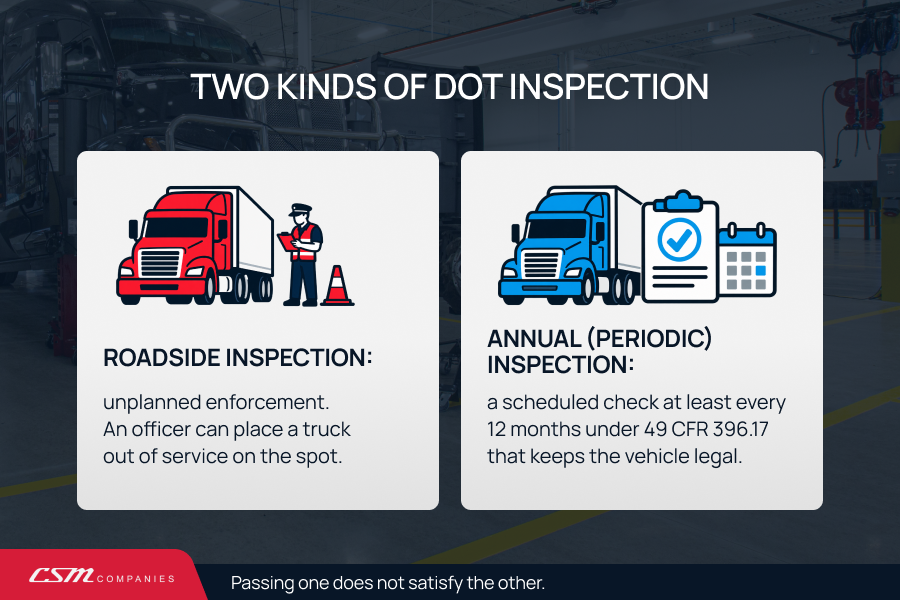
One distinction matters before anything else, because the term covers two different events. A roadside DOT inspection is an enforcement an officer runs at a scale, weigh station or roadside stop. The annual, or periodic, DOT inspection required under 49 CFR 396.17 is a separate, scheduled maintenance-compliance requirement. This guide covers both.
Who Can Be Subject to a DOT Inspection?
Any commercial motor vehicle operating in interstate commerce, and many in intrastate commerce, can be inspected. That generally includes trucks over 10,001 pounds, vehicles carrying placarded hazardous materials, and passenger-carrying commercial vehicles. If you run a commercial truck, you are subject to inspection.
Roadside DOT Inspection vs Annual DOT Inspection
A roadside inspection and an annual inspection are easy to confuse, but they are two different events. A roadside inspection is run by a certified enforcement officer at a scale, weigh station, or roadside stop, and its result is recorded against the carrier’s CSA safety score. An annual, or periodic, inspection is performed by a qualified inspector against the standards in 49 CFR 396.17, then documented with a report or decal the fleet keeps on file. One can place a truck out of service on the spot. The other is a compliance record you maintain. Passing one does not satisfy the other.
DOT Inspection Levels Explained: Level 1 Through Level 6
DOT inspection levels are standardized categories that define how thorough an inspection is and what it covers. CVSA sets them, and each level has a different focus, from a full driver-and-vehicle examination down to a credentials-only check. Here is how Levels 1 through 6 compare:
| Level | Name | Main Focus | Driver Checked? | Vehicle Checked? |
|---|---|---|---|---|
| Level 1 | North American Standard Inspection | Comprehensive driver and vehicle inspection | Yes | Yes |
| Level 2 | Walk-Around Driver/Vehicle Inspection | Items visible without going underneath | Yes | Yes |
| Level 3 | Driver/Credential/Administrative Inspection | Driver credentials, records and administrative compliance | Yes | Generally no mechanical inspection |
| Level 4 | Special Inspection | A specific component or issue being studied | Varies by the item studied | Varies by the item studied |
| Level 5 | Vehicle-Only Inspection | Level 1 vehicle components without the driver present | No | Yes |
| Level 6 | Radioactive Materials Inspection | Enhanced inspection for certain radioactive shipments (Transuranic Waste / HRCQ) | Yes | Yes |
CVSA actually recognizes nine inspection levels in total. This guide details Levels 1 to 6, the ones most trucks encounter. The other three levels are Level 7 (jurisdiction-mandated inspections, such as certain school bus or limousine checks), Level 8 (an electronic inspection conducted remotely) and Level 9 (a post-crash inspection).
For most fleets, Level 1 and Level 3 are the two to prepare for, since they are the most common roadside inspections.
What Happens During a Level 1 DOT Inspection?
A Level 1 DOT inspection, officially the North American Standard Inspection, is the most comprehensive roadside inspection. It is a 37-step procedure that examines both the driver and the vehicle, and it is the inspection that most often places trucks out of service.
Driver Requirements Checked During Level 1
On the driver side, a Level 1 inspection reviews credentials and compliance records. Inspectors may check:
- Driver’s license
- Medical Examiner’s Certificate when applicable
- Skill Performance Evaluation certificate when applicable
- Record of duty status
- Hours-of-service compliance
- Seat belt use
- Alcohol and drug requirements
- Required inspection reports
Vehicle Components Checked During Level 1
On the vehicle side, a Level 1 inspection covers the systems most likely to fail. Inspectors examine:
- Brake systems
- Steering
- Suspension
- Tires
- Wheels, rims and hubs
- Lighting
- Fuel and exhaust systems
- Frame
- Coupling devices
- Driveline and driveshaft
- Cargo securement
- Windshield and wipers
- Trailer and body condition
- Hazardous-material requirements when applicable
What sets Level 1 apart is that the inspector may physically go underneath the vehicle to check brakes, steering and the frame, which the walk-around levels do not.
How Long Does a Level 1 DOT Inspection Take?
A Level 1 inspection usually takes under an hour, though the exact time depends on the truck, the load, and what the inspector finds. A clean, well-maintained truck moves through faster.
What Is Checked During a Level 3 DOT Inspection?
A Level 3 DOT inspection is a driver and credential inspection. It focuses on the driver’s documents and administrative compliance rather than the mechanical condition of the truck, which makes it faster than a Level 1. Inspectors commonly review:
- Driver’s license
- Medical certification when applicable
- Skill Performance Evaluation documentation when applicable
- Record of duty status
- Hours of service
- Seat belt
- Vehicle inspection reports when required
- Carrier identification and operating status
Because a Level 3 inspection is credentials-focused, the mechanical violations normally tied to a Level 1 or Level 2 are not part of a standard Level 3. If your paperwork and hours are in order, a Level 3 is usually quick.
Level 1 vs. Level 3 DOT Inspection
The difference between a Level 1 and a Level 3 inspection is scope. A Level 1 inspection examines the driver and the full vehicle, including components underneath. A Level 3 inspection examines the driver and documents only. Level 1 is where mechanical defects surface, and Level 3 is where paperwork problems do.
DOT Annual Inspection Requirements for Trucks and Trailers
A DOT annual inspection is the periodic inspection every commercial motor vehicle must pass at least once every 12 months under 49 CFR 396.17. Keeping each vehicle current and on schedule is the fleet’s responsibility.
In a tractor-trailer combination, each unit has to meet the requirements on its own. A tractor and a trailer are inspected and documented separately, not treated as one asset. Each inspection must meet at least the minimum standards in the federal rules.
How Often Is a DOT Annual Inspection Required?
A DOT annual inspection is required at least once every 12 months. Many fleets inspect more often as part of preventive maintenance, but 12 months is the federal minimum.
Do Trailers Need Annual DOT Inspections?
Yes. Trailers are commercial motor vehicles too, and each one needs its own periodic inspection and documentation. A current tractor inspection does not cover the trailer behind it.
Who Can Perform an Annual DOT Inspection?
The inspector must be qualified under the federal rules, with the training and experience to judge whether a vehicle meets the minimum standards. A commercial truck service shop with certified inspectors is the straightforward option.
An annual inspection is a predictable, scheduled event, which makes it the easiest compliance task to plan around. CSM service shops perform annual DOT inspections on both trucks and trailers, and because they are full repair shops, any defect found can be corrected on the same visit.

DOT Inspection Checklist: What Inspectors Look For
A DOT inspection checklist is a pre-inspection review you run before a truck goes out, so you catch the problems an officer would. Use the categories below as a pre-trip and pre-inspection guide.
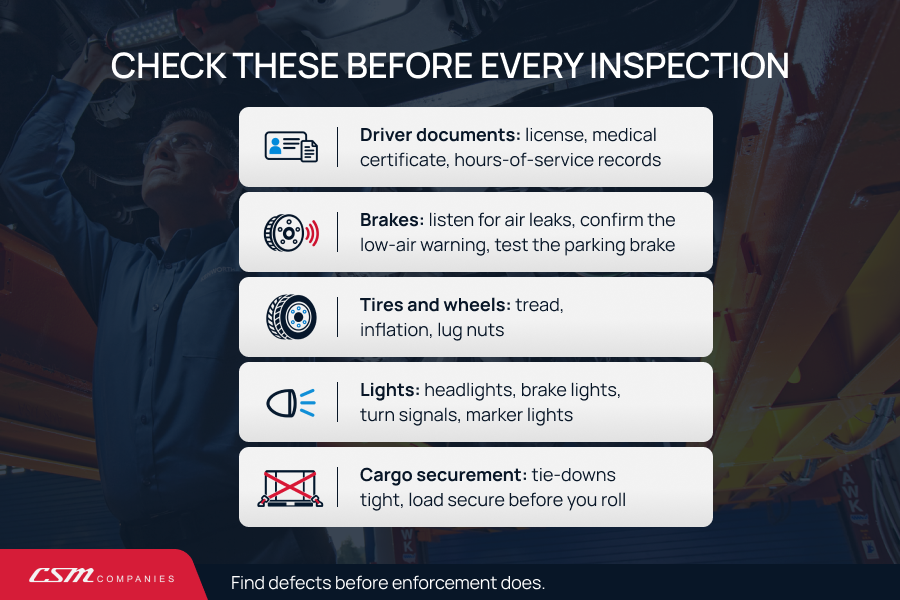
- Driver documentation: driver’s license; medical certification when required; hours-of-service records; required permits and documentation; previous inspection documentation where applicable.
- Brakes: brake components, hoses and tubing, brake adjustment, air leaks, low-air warning system, and parking and emergency brake.
- Tires and wheels: tire condition, tread depth, inflation, exposed cord or damage, lug nuts, wheels, rims, and hubs.
- Lights and electrical: headlights, brake lights, tail lights, turn signals, clearance and marker lights, and reflectors.
- Steering and suspension: steering components, steering wheel play, springs, air suspension, mounting hardware.
- Truck condition: fuel system, exhaust, frame, windshield, wipers, mirrors.
- Trailer: coupling components, fifth wheel, kingpin, trailer frame and body, landing gear, trailer brakes, trailer lights, and tires and wheels.
- Cargo: load securement, tie-downs, signs of cargo movement, placards and hazardous material documentation where applicable.
Common DOT Inspection Violations and How to Avoid Them
The most common DOT inspection violations cluster in a few systems, and brakes lead by a wide margin. In CVSA’s 2026 International Roadcheck, brake systems were the top vehicle out-of-service violation at 24.3% of all vehicle out-of-service violations, and brake-related issues together made up 39.1%. Focus your prep where the violations actually happen.
Brake Violations
Brake defects are the violations inspectors find most often. They look for worn linings, air leaks, out-of-adjustment brakes, and defective chambers. Before departure, a driver should listen for air leaks, confirm the low-air warning works, and test the parking brake. Any defective brake or audible leak is grounds to take the truck out of service, so it needs to be fixed before the truck rolls.
Tire and Wheel Violations
Tread below the legal minimum, exposed cord, flat or leaking tires, and missing or loose lug nuts are amongst the most common tire and wheel violations inspectors find. A quick walk-around that checks tread, inflation, and lug nuts catches most of them. A flat or an exposed belt will put the truck out of service.
Lighting Violations
Inoperative headlights, brake lights, tail lights, turn signals and marker lights are among the easiest violations to pick up and the easiest to prevent. Test every lamp as part of the pre-trip and replace anything that is out before the truck leaves.
Hours-of-Service Violations
Missing, false, or out-of-date records of duty status and driving over the hours limit are the leading driver-side violations. Keeping the ELD current and the logs accurate is the fix. These are paperwork problems, which makes them entirely preventable.
Cargo Securement Problems
Too few tie-downs, loose or shifted loads, and missing placards or hazmat documentation all draw violations. The driver should verify securement before each trip and recheck it after the first few miles. Securement is a before-you-roll habit, not an afterthought.
DOT Truck Inspection vs DOT Trailer Inspection
A DOT inspection looks at the whole commercial vehicle combination, not just the tractor. The truck and the trailer are checked against different component lists, and both have to pass. Here is what each side covers.
On the truck or tractor, inspectors focus on the brakes, steering, suspension, tires, wheels, lights, fuel system, exhaust, frame, and the driver-related requirements.
On the trailer, they check the trailer brakes, tires and wheels, suspension, lighting, frame and body, coupling devices, the kingpin and fifth-wheel connection, cargo securement, and landing gear where fitted.
Trailers also need their own annual inspection under the federal rules, so a trailer that is rarely checked is a common weak point. CSM shops inspect and service both tractors and trailers, which keeps the whole combination compliant.
What DOT Inspection Forms and Records Do You Need?
There is no single universal “DOT inspection form” that covers every scenario. The paperwork depends on the inspection type, and mixing the documents up is a common source of confusion. These are the records that may apply:
- Annual or periodic inspection documentation
- Driver vehicle inspection reports (DVIRs) where required
- Roadside inspection reports
- Maintenance and repair records
- Proof of periodic inspection
- Repair certifications after identified defects
Carriers must retain these records for set periods under FMCSA Part 396. Confirm the exact retention periods for your operation, since they vary by document type.
How to Prepare for a DOT Inspection
Preparing for a DOT inspection comes down to the same habits that keep a truck safe: current paperwork, a thorough pre-trip, and defects fixed before they are found. Build the routine around three roles.
Driver Preparation
Keep credentials current, keep required records accessible, do a careful pre-trip, report defects immediately, and confirm the required documents are in the cab before every trip. A driver who arrives ready moves through any inspection level faster and gives the officer fewer reasons to look closer.
Vehicle Preparation
Check the brakes, inspect the tires, test the lights, check steering and suspension, inspect the coupling devices, verify cargo securement, look for fluid or fuel leaks, and confirm the trailer’s condition. Catching a worn brake or a dead lamp in the yard costs far less than an out-of-service order on the road.
Fleet Preparation
Maintain preventive-maintenance schedules, track annual inspection due dates, correct defects promptly, keep accurate inspection and repair records, and train drivers on common inspection issues. Treating inspection readiness as a routine rather than a scramble keeps your CSA scores clean over time.
The goal is simple: find defects before enforcement does. A scheduled professional inspection and a real preventive-maintenance program turn surprises into planned repairs.
Where to Get a DOT Inspection Near You
When you search for a DOT inspection near you, look for a shop that can both inspect and repair a commercial truck, not just sign a form. The right provider offers:
- Commercial truck expertise
- Qualified inspectors
- The ability to inspect tractors and trailers
- Heavy-duty brake, tire, suspension and electrical repair
- The ability to fix defects found during the inspection
- Convenient scheduling
- Maintenance documentation
That combination matters, because a shop that only inspects sends you elsewhere to fix what it finds. CSM service shops handle the annual DOT inspection and the repairs in one place, on both trucks and trailers. CSM runs more than 30 service locations across six states.
Do not wait until your annual inspection expires. Scheduling it ahead keeps the truck compliant and gives the shop time to correct any defects before they become roadside violations.