What Is a DPF Regen? Passive, Active and Forced Regeneration Explained

DPF Regen: Key Facts
A DPF regen is the truck burning soot out of its diesel particulate filter (DPF) so the engine keeps making power. The essentials:
- How long: an active regen often takes about 20 to 40 minutes; a parked or forced regen 30 to 45 minutes.
- The regen light: soot is loading and the truck wants to regenerate. A flashing light means run a parked regen soon.
- What it is not: a fix for ash. A regen burns off soot but not ash, so a full filter still needs a professional DPF cleaning.
- Where CSM fits: forced regens, aftertreatment diagnostics and DPF cleaning across more than 30 locations in six states.
What Is a DPF Regen?
A DPF regen raises exhaust temperature high enough to burn trapped soot out of the diesel particulate filter (DPF), so the engine keeps making power. Most regens run automatically while you drive. When one does not finish, soot builds up and the truck can fall into a derate, a state of reduced engine power. That is when a service center like CSM Companies steps in with a forced regen, diagnostics or a DPF cleaning.
What Does “Regen” Mean on a Diesel Truck?
“Regen” is short for regeneration: the DPF cleans itself by burning off soot, on its own or with help from the engine or a technician.
What Happens Inside the DPF During Regeneration?
High exhaust heat oxidizes the trapped soot into gases and a little ash. The soot burns off. The ash stays behind, which is why a DPF still needs professional cleaning.
Why Do Diesel Trucks Need DPF Regeneration?
Diesel trucks need DPF regeneration because the filter only works while it stays clear. Every on-highway diesel built since 2007 uses a DPF to meet EPA emissions rules. As soot loads up, it restricts exhaust flow. That raises back-pressure, triggers warning lights and can force the engine into a derate.
Soot vs. Ash in a DPF
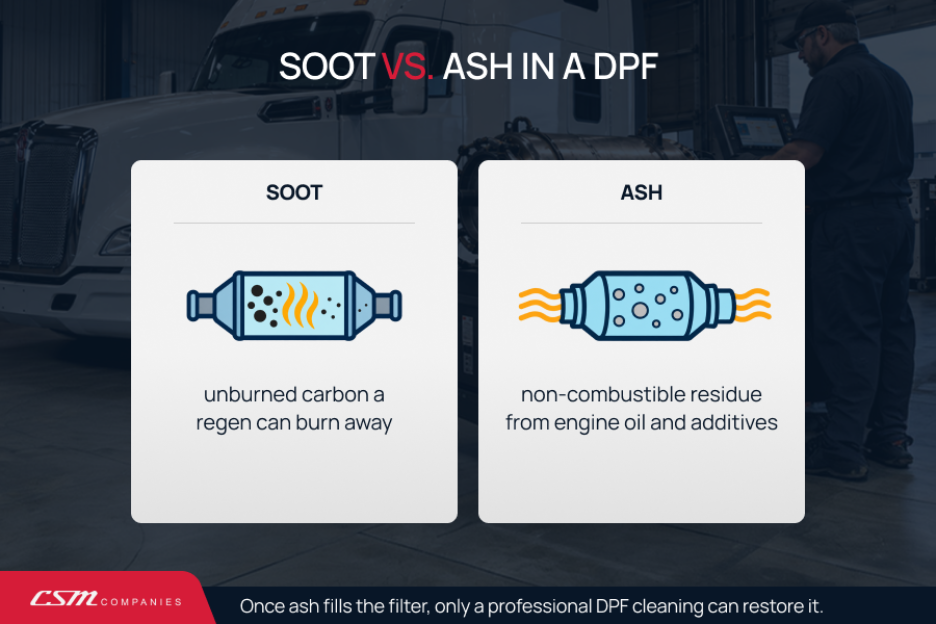
Soot is unburned carbon a regen can burn away. Ash is non-combustible residue from engine oil and additives. A regen removes soot but cannot remove ash. EPA’s overview of diesel particulate filters explains the filter itself.
Why Regen Does Not Remove DPF Ash
Because ash will not burn, it accumulates no matter how many regens run. Once ash fills the filter, only a professional DPF cleaning can restore it.
What Are the Different Types of DPF Regen?
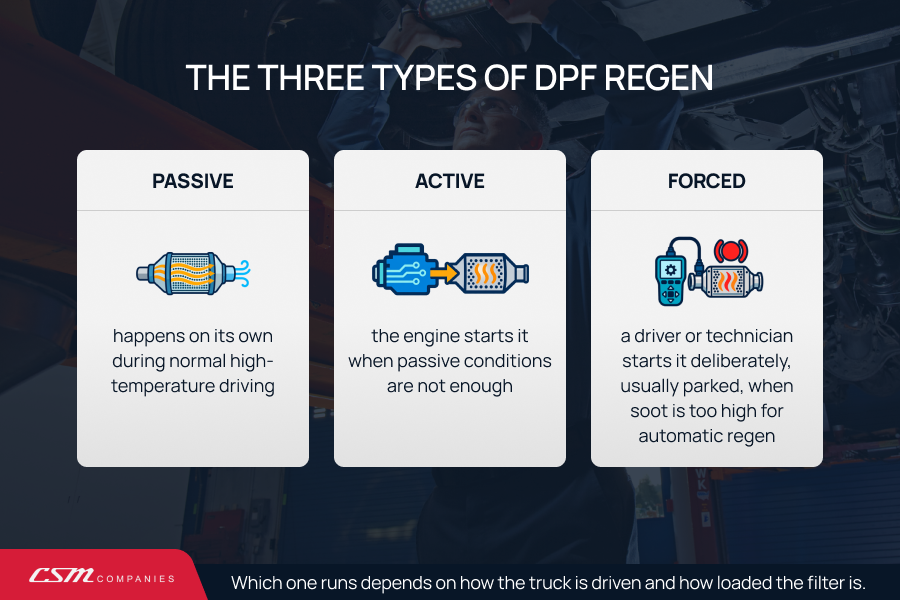
There are three main types of DPF regen, differing in how the heat is made and who starts them.
- Passive: happens on its own during normal high-temperature driving.
- Active: the engine starts when passive conditions are not enough.
- Parked regeneration is typically initiated by the driver while the truck is stationary.
- Forced regeneration is generally initiated by a technician using diagnostic equipment when additional intervention is required.
What Is Passive DPF Regeneration?
Passive regeneration happens automatically when normal driving already makes enough exhaust heat to burn off soot as it collects, most often on sustained highway runs. Because it runs in the background without changing how the truck drives, most drivers never notice it.
What Is Active DPF Regeneration?
Active DPF regeneration is a regen the engine starts on its own when driving does not create enough heat for passive regen, such as during idling, light loads or stop-and-go work. The engine control system injects a little extra fuel to raise exhaust temperature and burn off the soot while you drive. You can keep working, though you might notice a brief change in idle or higher fuel use.
What Is a Forced Regen?
A forced regen is a regeneration cycle deliberately initiated by a technician using a diagnostic tool, typically when soot levels are too high for automatic regeneration. It is started from the dash or with a diagnostic tool. Unlike automatic passive and active regens, it is a recovery step for a filter that is already too full. If a truck needs forced regens often, something else is usually wrong.
What Is a Parked Regen on a Truck?
A parked regen is a stationary regeneration, requested by the truck or started by the driver from the dash when driving alone will not clear the filter. Names and steps vary by manufacturer. Because it runs at high exhaust temperature, park clear of anything flammable and let the cycle finish.
How Long Does a DPF Regen Take?
How long a DPF regen takes depends on the truck, engine, regen type, soot load and conditions. An active regen often runs about twenty to forty minutes while you keep driving. A parked or forced regen commonly takes thirty to forty-five minutes, sometimes longer on a heavily loaded filter. If one will not finish, that points to a problem worth diagnosing rather than repeating.
What Does the DPF Regen Light Mean?
A DPF or regen light tells you the filter is loading with soot and the truck wants to regenerate. Meanings and urgency vary by manufacturer, so check your manual. The warning escalates as soot rises: first a request to allow a regen, then a prompt to run a parked regen soon, and finally more serious aftertreatment warnings.
Solid vs. Flashing DPF Regen Light
On many trucks a solid DPF light means a regen is needed or in progress, while a flashing light means soot is high and you should run a parked regen soon. Confirm the exact meaning in your truck’s manual.
What Happens If a Truck Cannot Complete a Regen?
If DPF regens keep getting interrupted, soot keeps building. The truck then reduces power in stages to protect the filter and engine, dropping into a derate that limits speed until the DPF is cleared. Repeated failed regens are a symptom, often of a faulty sensor, a DEF or SCR fault, an EGR or injector issue, or an ash-loaded DPF. The fix is diagnosis and service, not another forced regen.
How to Reduce DPF Regen Problems
Most DPF regen trouble is preventable:
- Let requested regens finish; interrupting one leaves soot in the filter and makes the next harder.
- Do not ignore the light. Running a parked regen when the truck asks is cheaper than clearing a derate later.
- Follow the manufacturer’s procedures and keep the engine and aftertreatment, including DEF quality and sensors, in good shape; federal rules require the truck to be maintained under FMCSA Part 396.
- Get a professional DPF cleaning once ash has built up, since regens cannot remove ash.
Where to Get a Forced Regen and DPF Service
A service center is the fastest way back to full power when a truck needs a forced regen, keeps failing regens or has an ash-loaded filter. At CSM Companies, our technicians run forced and parked regens, diagnose failing regens and service the whole aftertreatment system. For a filter regens can no longer clear, we provide professional DPF cleaning and stock the genuine DPF, DEF and sensor parts to fix the root cause, across more than 30 locations in six states.
Learn the passive, active, forced and parked regens, watch the regen light, and let each regen finish. That keeps soot in check and your truck out of a derate. When regens stop doing the job, CSM Companies handles forced regens, diagnostics and DPF service.