
DEF Fluid: Key Facts
Diesel Exhaust Fluid is easy to overlook until it stops a truck. If the tank runs low, a modern diesel-powered truck does far more than post a warning light: the engine derates, road speed drops and the result is unplanned downtime that costs real money. Knowing how long DEF fluid lasts, both on the road and in storage, is the simplest way to prevent that and to keep the SCR system healthy.
At CSM Companies, a Kenworth dealer network with more than 45 years in the industry, we treat DEF and SCR condition as an uptime matter, not just an emissions requirement.
• What it is: Diesel Exhaust Fluid, 32.5 percent urea and 67.5 percent deionized water, produced according to the ISO 22241 specification.
• What it does: feeds the SCR system, converting harmful nitrogen oxides into nitrogen and water vapor.
• Consumption: roughly 2 to 3 percent of diesel use.
• Tank size: usually 13 to 23 gallons on a Class 8 truck.
• Shelf life: about one to two years sealed, if kept cool.
What Is DEF Fluid and Why Is It Important
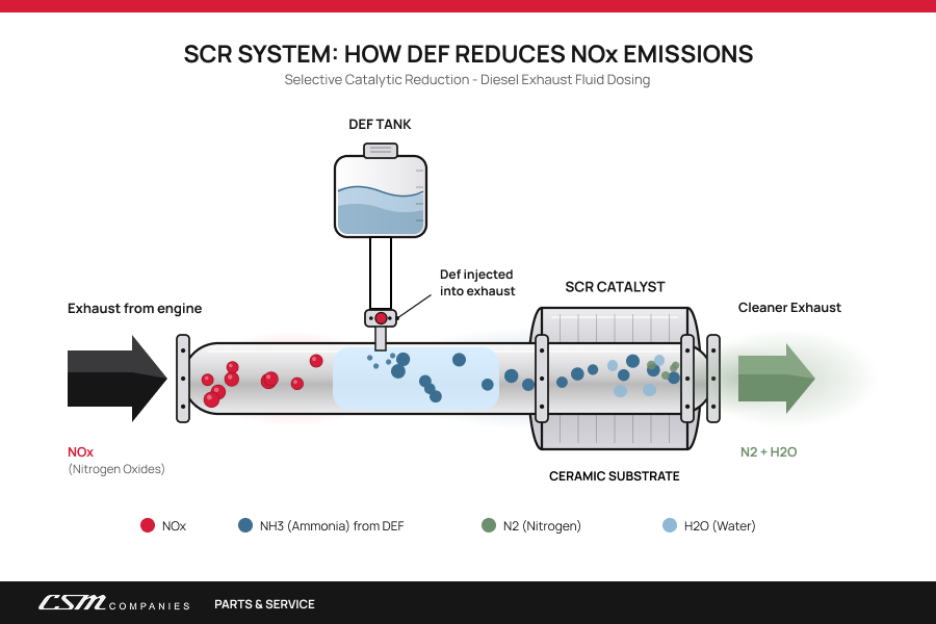
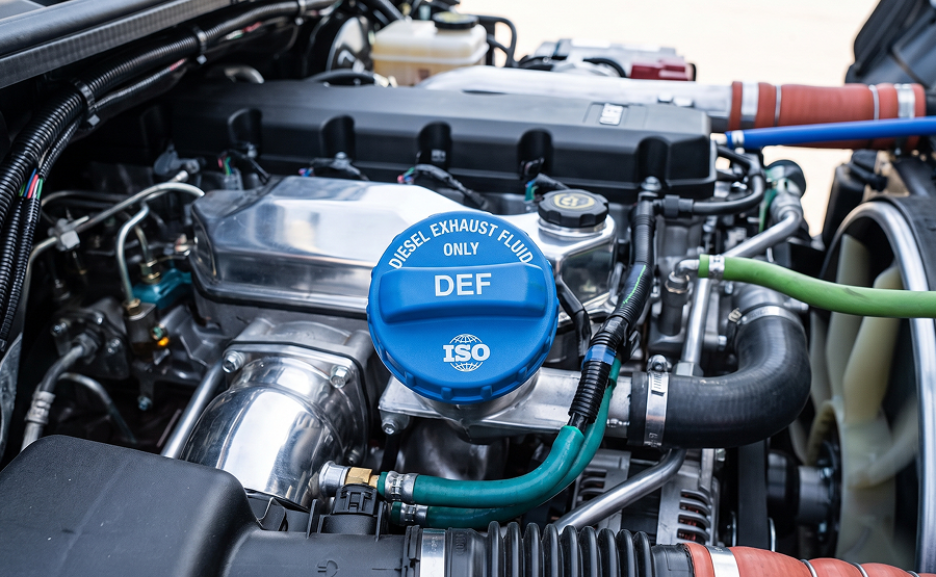
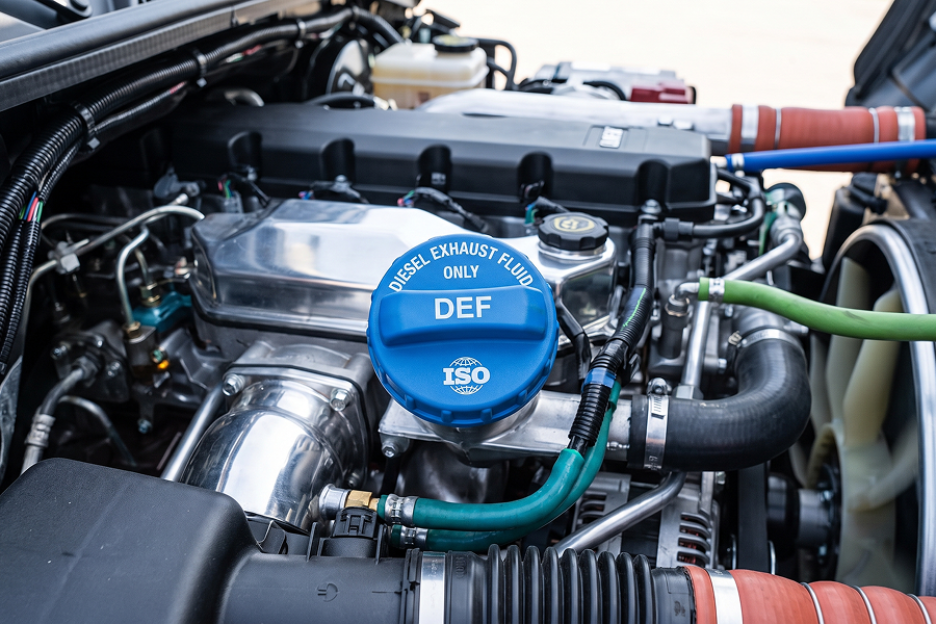
DEF is neither fuel nor a fuel additive. It is carried in its own tank, usually under a blue cap, entirely separate from the diesel. Since the 2010 EPA emissions rules, on-highway diesel engines clean their exhaust through Selective Catalytic Reduction, or SCR.
A doser injects a fine mist of DEF into the hot exhaust stream, where it reacts with nitrogen oxides and leaves mostly nitrogen and water vapor. Remove the DEF and the SCR system cannot function, so the engine is programmed to lose power as the tank empties.
The consequences reach past emissions. When the tank empties, the truck derates to roughly 5 mph, which parks it until it is refilled or repaired. That idle time is expensive: an out-of-service truck still carries roughly $600 or more per day in lost revenue and fixed costs, according to ATRI operational cost data.
Neglected SCR faults compound the problem: a failed NOx sensor, a bad DEF doser or contaminated fluid each adds repair cost and shop time. Tampering with or deleting the SCR system to avoid DEF is illegal under the Clean Air Act, and EPA penalties reach $4,527 per tampering event and as much as $45,268 per vehicle. Maintaining the system and keeping quality DEF in the tank costs far less than any of these outcomes.
How Long Does DEF Fluid Typically Last
Two questions sit inside this one: how long a full tank lasts while driving, and how long DEF keeps in storage before it is used.
How Long a Tank Lasts on the Road
In use, DEF is consumed at about 2 to 3 percent of diesel burn, so every 100 gallons of diesel draws 2 to 3 gallons of DEF. A 23-gallon DEF tank supports roughly 750 to 1,100 gallons of diesel, which at 6 to 7 mpg translates to several thousand miles. Most drivers top off every second or third diesel fill.
How Long DEF Lasts in Storage
Sealed and kept cool, DEF stays within spec for about one to two years. Heat is the enemy: stored above 86 degrees Fahrenheit for extended periods, its usable life can fall to roughly six months, so older stock should be used first. Our parts counters rotate DEF stock by date for exactly that reason, and we advise fleets that keep drums or totes on site to do the same.
Factors That Affect DEF Consumption
The 2 to 3 percent figure is a baseline. Consumption tracks how hard the engine is working:
• Load weight: heavier loads produce more NOx and burn more DEF.
• Terrain: sustained climbing raises both fuel and DEF use.
• Idle time: extended idling consumes DEF without covering a mile.
• Driving style: hard acceleration pushes consumption higher.
• DEF quality: off-spec or contaminated fluid can foul the SCR system and disrupt dosing.
DEF Warning Lights and Signs You Need a Refill
Reading the DEF Warning Stages
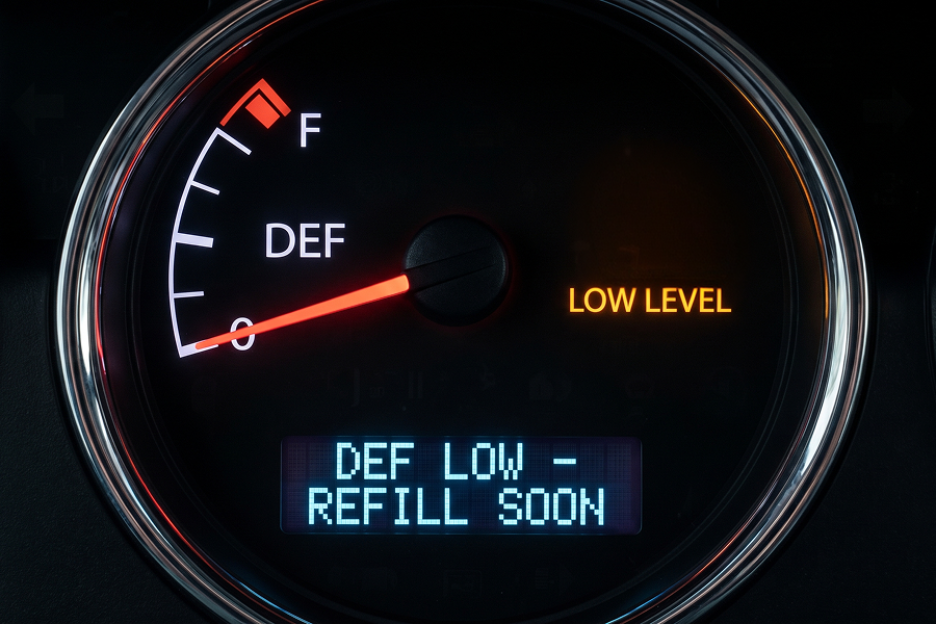
A low tank does not arrive unannounced. The DEF gauge falls first, and a steady amber light appears, typically near 10 percent capacity. Ignore it and the light begins to flash, often alongside a check-engine lamp. Run the tank dry, and the truck derates, cutting power and capping speed, commonly to about 5 mph, until fluid is added. Acting at that first amber light avoids every stage that follows.
Need help with a DEF warning light? Schedule SCR and aftertreatment service with CSM Companies.
How Often Should You Check DEF Levels?
Our technicians recommend a very straightforward approach: check DEF at every fuel stop. Because a tank spans several diesel fills, a glance at the gauge each time catches a low level with room to spare. Fold it into the pre-trip as well. Fleets can also monitor levels through telematics so dispatch knows which trucks need a top-off before they leave the yard. On newer Kenworth models, TruckTech+® Remote Diagnostics reports SCR and DEF system faults remotely, so a dosing issue is flagged before it ever becomes a derate.
“Half the derates we see could have been easily avoided. The truck gives you plenty of warning,” says a CSM Companies service manager. “Topping off at the first amber light is the cheapest uptime insurance there is.”
Call-to-action: Need DEF or aftertreatment parts? Find your nearest CSM Companies parts counter.
Need DEF or aftertreatment parts? Find your nearest CSM Companies parts counter.
Tips to Extend DEF Efficiency and Avoid Issues
The SCR system is among the most sensitive on a modern diesel. NOx sensors, the doser and dosing controls can all throw faults, and a single bad component can derate a truck with a full tank. The most common DEF-related failure our technicians see is not an empty tank; it is a doser or pump fouled by off-spec fluid, a repair that costs far more than the few dollars saved on uncertified fluid. Clean fluid and disciplined habits prevent most of it:
• Buy certified DEF that meets ISO 22241, and avoid uncertified or low-quality product.
• Store it between 12 and 86 degrees Fahrenheit, sealed and out of direct sun.
• Keep it clean; even a trace of dirt, fuel or other fluid can damage the SCR system.
• Top off rather than running to empty, which avoids the derate.
• Do not worry about freezing: DEF freezes near 12 degrees Fahrenheit without harm, and trucks have heated tanks and lines.
• Trim unnecessary idling and keep the SCR system maintained so it doses accurately.
FAQs About DEF Fluid
The DEF questions we get the most from drivers and fleets:
A full tank usually lasts several thousand miles, since trucks use DEF at about 2 to 3 per cent of diesel. With a 13-to-23-gallon tank, most drivers refill every second or third diesel fill.
Opened DEF stays usable for about a year if you reseal it and store it in a cool environment, out of the sun. Keep it capped and free of dust or other fluids that would contaminate it.
Sealed, it lasts about one to two years stored between 12 and 86 degrees Fahrenheit. Sustained heat above 86 degrees can cut that to around six months, so use older stock first.
A DEF gauge on the dash and a steady amber light at around 10 per cent are the first signs. Keep driving, and it flashes, often with a check-engine lamp. Treat the first amber light as the cue to refill.
The truck derates, cutting power and capping speed, commonly to about 5 mph, until you add DEF. That is by design: the engine is not permitted to run without treating its exhaust. Never run the tank dry.
DEF freezes at about 12 degrees Fahrenheit, but freezing does not ruin it. It thaws to full strength, and trucks have heated tanks and lines. Do not add anything to it or dilute it.
Roughly 2 to 3 per cent of diesel, so 100 gallons of diesel needs 2 to 3 gallons of DEF. Heavy loads, hills and idling push that higher.
Overfilling is rarely the real concern. DEF goes in its own tank, separate from fuel, and the SCR system meters what it needs. The real risk is filling the wrong tank or contamination, so use the blue-capped filler.
Heat is the main thing that degrades DEF. Stored cool, it lasts one to two years, but sustained heat above 86 degrees can cut it to around six months. Keep it out of the sun.
Buy DEF certified to ISO 22241 from a reputable supplier, since off-spec or contaminated fluid can damage the SCR system. Every CSM Companies parts counter stocks certified DEF, and travel centers carry it as well.
DEF and SCR keep a truck legal and earning, so they deserve the same attention as the engine itself. CSM Companies stocks certified DEF and quality parts and services the SCR and aftertreatment systems every day on PACCAR MX-13-powered equipment as well as the Mack, Hino, and Autocar trucks we sell and support. That means a DEF warning or derate is diagnosed and repaired quickly at any of our locations, from Wisconsin Kenworth to French Ellison Truck Center.
Keep your truck working. Schedule DEF, SCR or aftertreatment service with CSM Companies today.